
Rekey or Replace Your Locks: Which Do You Need?
Rekey or replace locks based on their condition: rekey a sound lock to change which keys work, and replace damaged hardware or a lock that no longer meets your needs. Start by checking how the lock works with the door open.
Need help now? (954) 606-9052
Should You Rekey or Replace Locks That Still Work?
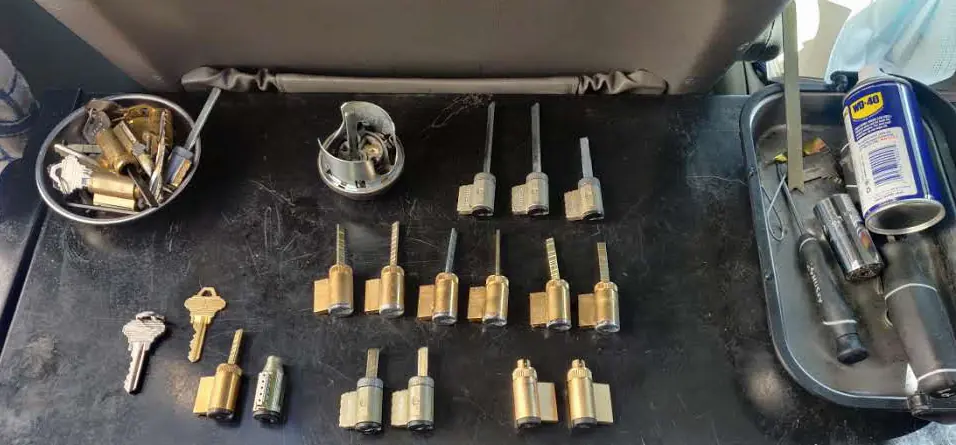
A working lock does not need replacement just because someone else has a key. Rekeying changes the key-operated cylinder so a different key works. The existing lock hardware stays in place, making this the relevant option when your concern is previous key access.
Replacement addresses the hardware itself. Choose that path when the lock is damaged, its parts no longer operate reliably, or you want a different type of lock. Rekeying does not strengthen a damaged bolt, restore a worn handle, or correct a door that does not line up with its frame.
Which Lock Change Addresses Your Actual Problem?
Sound lock, unwanted key access
Rekeying changes which key operates the existing cylinder. This fits a missing key or an old copy you no longer want someone to use, provided the lock itself remains suitable and works correctly.
Broken or unreliable hardware
Lock repair or replacement addresses a mechanical problem. A key that catches, a loose cylinder, or a bolt that sticks needs inspection before you treat the issue as a simple change of keys.
A different lock function
Replacement makes sense when you want hardware with a different function, such as adding keypad entry. First check whether the new lock fits the door and whether its inside operation suits everyone who uses it.
A door that will not line up
A bolt that moves freely with the door open but catches when it closes points toward a fit or alignment problem. Check the door, hinges, and strike plate before buying another lock.
What Should You Check Before Changing a Door Lock?
- Permission to change access — For a rental or shared property, check your agreement and obtain any required permission before changing keys or hardware. Coordinate any access that the property owner or manager must retain.
- Every lock on the door — Check the handle lock and deadbolt separately. Changing one cylinder leaves the other unchanged, so an old key may still operate part of the door’s locking hardware.
- The condition of the key — Look for a bent or cracked key before testing it. Stop using a visibly damaged key; forcing it can leave a broken piece inside the cylinder.
- Visible hardware damage — Look for loose parts, cracks, or damage around the cylinder and bolt. Photographing or taking apart the mechanism is unnecessary for this initial check.
- How the door closes — Notice whether you must lift, push, or pull the door to turn the lock. That extra pressure can reveal a door-fit problem that a new key will not solve.
Need help now? (954) 606-9052
How Can You Check a Lock Without Taking It Apart?
- Secure the door open — Start with the door open so a sticking lock cannot shut you out during the check. Make sure the door will stay open while you examine the handle and deadbolt.
- Inspect the handle and cylinder — Look for movement where the handle and key cylinder meet the door. Loose or visibly damaged hardware needs attention before rekeying becomes the main decision.
- Check the inside turn — Move the inside thumbturn through its normal range without forcing it. Watch whether the deadbolt extends and retracts fully while the door remains open.
- Test an undamaged working key — Insert the key normally and turn it gently. Stop if it binds or requires unusual pressure; do not force repeated attempts.
- Compare another existing key — If you have another undamaged key for that lock, compare how it operates with the door open. One troublesome key and one smooth-working key can indicate a key problem rather than a reason to replace all the hardware.
- Inspect the strike plate — Look at the metal plate on the frame where the latch or bolt enters. Fresh scrape marks or an obviously uneven fit can help explain why the lock catches only when the door closes.
- Check closed-door operation only if reliable — Proceed only if the open-door checks were smooth and you can reopen the door normally. Keep your key with you and stop if closing the door introduces resistance.
- Choose the next action — A sound lock with an access concern is a candidate for rekeying; binding, damage, or poor alignment calls for inspection or repair first. Keep this an owner-level check and leave cylinder disassembly to a locksmith.
What Does Rekeying Change About Old Keys?
A properly rekeyed cylinder stops accepting its previous key. That change applies to the cylinder that was rekeyed, so consider every separate keyed lock that protects the same entrance. Our lock rekeying service addresses this change in key access without requiring replacement of sound hardware.
Keypad codes and physical keys are separate access methods. Rekeying a keyed cylinder does not, by itself, delete keypad codes. For an electronic lock, use its exact model instructions to manage codes and check the physical key separately.
For a move or household access change, our guide to rekeying a house in Plantation covers when previous key copies become a concern.
Can Rekeying Put Several Door Locks on One Key?
Sometimes several locks can share one key, but their cylinders must be compatible. Similar-looking handles do not establish compatibility, and different locks may accept different key shapes. Check this before purchasing replacements solely to reduce the number of keys you carry.
Separate access may also be useful. You might want an exterior entrance and an interior storage door to use different keys because different people need access. Decide which doors should share access before changing cylinders; one key is convenient only when the same access belongs together.
Need help now? (954) 606-9052
Why Does a Rekeyed or New Lock Still Stick?
A lock can work correctly on its own and still catch against the door frame. If the bolt moves freely with the door open but resists when closed, changing the key again will not address the alignment. Our guide to a door that won’t latch or lock explains that separate problem.
Resistance with the door open points toward the key, cylinder, or lock mechanism instead. Stop forcing the key and arrange a locksmith inspection, especially if the key starts bending or the bolt stops moving fully. Repeated force can turn a repairable operating problem into a broken key or damaged lock.
After visible damage from an attempted entry, assess the surrounding door and frame as well as the cylinder. Fresh keys alone do not repair damage around the hardware.
What Should Work Before a Lock Change Is Finished?
Test every new key with the door open first. Each should insert, turn, and come out normally, and the inside turn should move the bolt through its full travel. Then check operation with the door closed without lifting or pushing the door into position.
For a rekey, check that the previous key no longer operates the changed cylinder. Test each separate keyed lock included in the work instead of assuming the entire door changed together. For replacement hardware, also check that the handle, latch, and inside release operate normally.
If any check fails, have the problem corrected before relying on that entrance. The useful result is controlled key access and reliable door operation; both need to work together.
Frequently asked questions
Do I need to replace my locks after losing a house key?
A lost key alone does not require new hardware. Rekeying is appropriate when the existing lock is sound and you need to stop the missing key from working. Include every cylinder that accepts that key in the access change.
Can a lock be rekeyed if I do not have its current key?
A missing current key does not automatically mean the entire lock needs replacement. The cylinder’s design and condition determine the available approach. We provide lock rekeying and lock changes, so damaged hardware can be addressed separately from the missing key.
Does rekeying make an older lock stronger?
Rekeying changes key access; it does not upgrade the lock’s physical construction. A worn bolt, damaged handle, or weak fit remains a separate issue. Choose repair or replacement when the hardware’s condition is the problem.
Can I keep my existing door handles when changing locks?
Rekeying generally keeps the existing handle and lock hardware in place. Some lock designs also allow a cylinder change without replacing the whole handle assembly. If you want different hardware, check its fit with the door’s existing openings before purchasing it.
Change Who Has Key Access
Call (954) 606-9052 for mobile lock rekeying, lock repair, or lock replacement.